


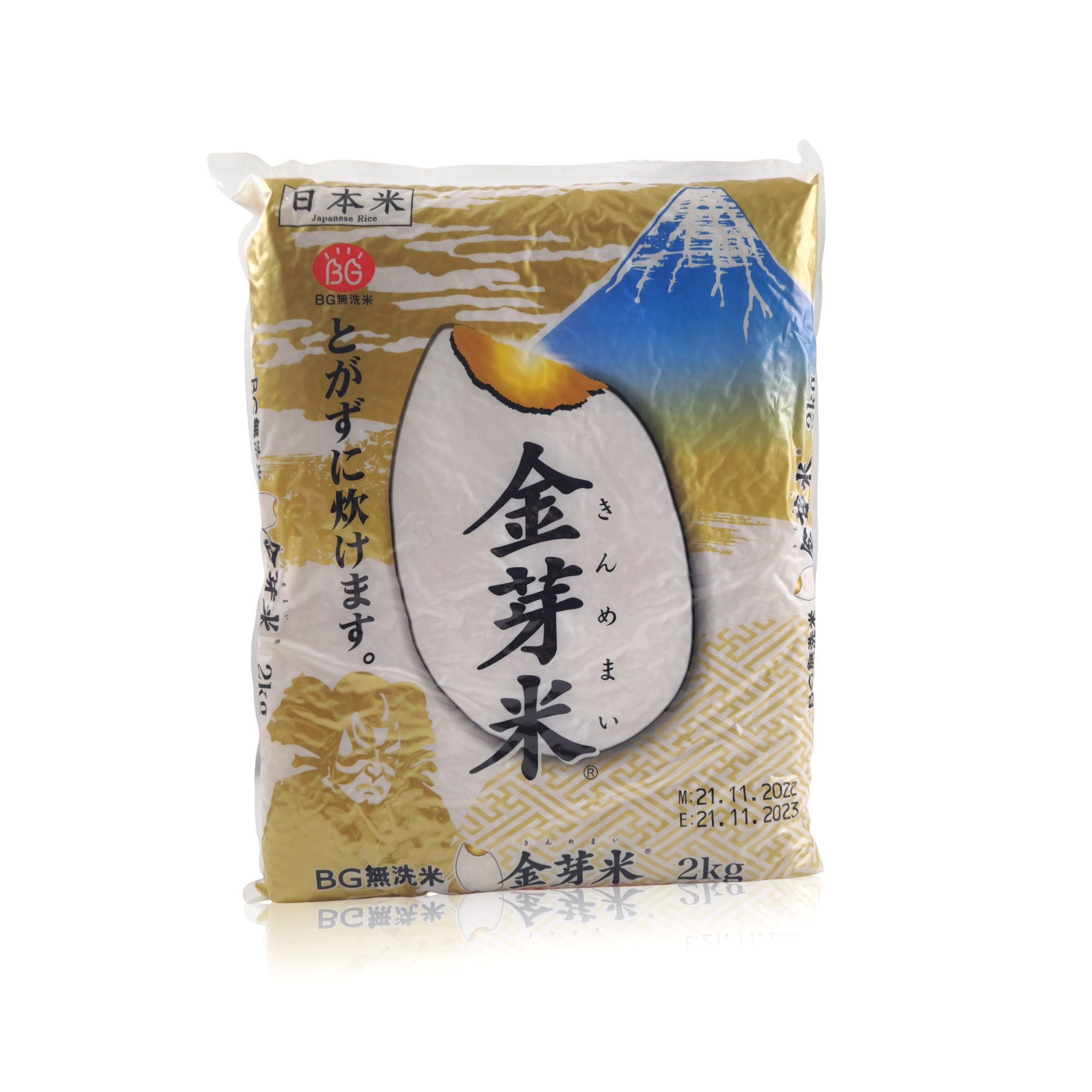
Rice, Japanese, Kinmemai 1 kg
Kinmemai was developed by Toyo Rice Corporation, which was founded in 1961 in Wakayama, Japan. The company began as an innovator in rice polishing machines, but soon took its passion for perfection to the rice itself. The result? A pre-washed rice that is not only practical, but also packed with flavor and nutrients.
Kinmemai is a rinse-free rice, which means you don’t have to rinse it before cooking. Thanks to our proprietary polishing method, only the bran and wax layers have been removed, leaving much of the rice’s natural flavor and nutrients intact.
An authentic and delicious rice that is not only easy to use but also packed with flavor and nutrition.
Taste and texture
Kinmemai rice has a unique buttery and nutty flavor, with a creamy texture that makes it ideal for a wide variety of dishes. Whether you’re preparing sushi, homemade onigiri (Japanese rice balls), or using it as a standard rice for Japanese and other international dishes, Kinmemai provides a flavor experience (and texture!) that’s hard to beat.
You can read more about it here: https://kinmemai.com/
Here’s how to cook rice in a saucepan (if you don’t have a rice cooker)
You can use rice cooker or boil in saucepan. It’s actually not difficult to cook rice in a saucepan, as long as you do it right. Do this:
Wash the rice once or twice in the pan (rinse it).
You need the right amount of water in relation to the rice.
1 dl rice, 1.7 dl water
3 dl rice, 5 dl water
Add water, wait at least 30 minutes! Important to wait a little before you start cooking. It’s okay to wait a little longer—for example, to prepare it in the evening and cook it the next day.
When the rice boils, reduce the heat to low. Let it simmer, covered, for about 20 minutes. Lid on all the time.
After a while, you can even turn off the stove or set the pan aside. Let the rice rest for 20 minutes before eating it.
Feel free to “fluff” the rice with a rice scoop or something similar once it’s done, to loosen it up and stir it around a bit.
Try your hand at it. Once you’ve found your recipe, write it down and do it the same way every time to get perfect rice!
Polished rice and lectins
Is it good to polish rice? Yes, we think so. Brown rice contains lectins, which are considered potentially unhealthy. There are those who deliberately avoid lectin-rich foods (like Malin at our place, she is an expert on lectins). If you want to avoid these substances, which are mentioned in the Plant Paradox Diet, Japanese rice is perfect. It is also gluten-free.
| Weight | 0.01 kg |
|---|
KÖPS OFTA IHOP
All products
All about health and food
All about health and food
Frequently bought together
Related products
All products

All products


All products
All products

All products
All products
All products