


Uncategorized
Aronia berries and your health
Jul
A rich source of polyphenols is the Aronia berry. No wonder it is called a superberry as it has a strong antioxidant effect. But why are we told we need to consume polyphenols and how do these substances have a rejuvenating effect on the body?
Background information
Polyphenols are a form of antioxidants with many health-promoting properties, known for their beneficial effects on the heart and blood vessels. Among other things, they are anti-inflammatory, they have vasodilating effects, they help lower blood pressure and they improve your blood sugar and blood lipids.
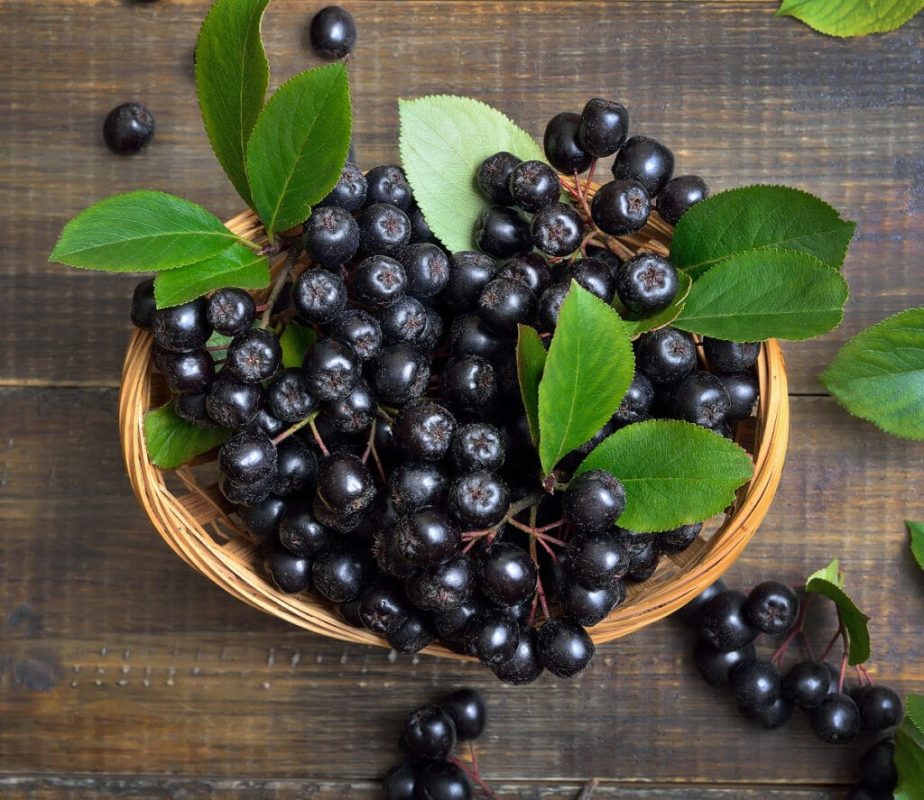
Aronia melanocarpa is a rich source of polyphenols. Aronia is a shrub in the Rosaceae family that produces edible berries, which are characterized by their purple-black color. Aronia is used in particular to make syrup, juice, liqueur, and even jelly.
Aronia has antibacterial properties
This black berry offers multiple health benefits as it has cardioprotective, anti-inflammatory, antiviral and antibacterial properties and also exerts liver-protective and immunomodulatory effects.
Previous research has shown that these berries can provide benefits for cardiovascular health in high-risk groups.
Aronia has multiple health benefits
The fact that the berry has an effect on so many different areas of the body can partly be linked to its beneficial effect on the intestinal flora. Aronia is an excellent source of vitamins—especially C, B2, and B6—and minerals. Polyphenols are known for their role in protecting the body from oxidative stress caused by environmental stressors such as pollution and fried foods, which cause free radicals to form in our bodies. Antioxidants in food can neutralize these harmful free radicals and prevent them from damaging our cells.
Free radicals – cause premature ageing
Free radicals are created naturally in the body all the time, produced by the mitochondria of cells to fight infected cells and kill bacteria. It’s when they become too many free radicals that we get into trouble. In the long run, this can have a negative impact on your skin and body. Chemically, a free radical is an atom or molecule that needs to bind to another electron to become stable. Thus, a molecule with unpaired electrons that are in disequilibrium with the protons and neutrons of the nucleus is a free radical. When out of balance, this unfinished molecule is very reactive with its environment. In order to feel stable, they attach to the nearest neighboring molecule, which is then destroyed, causing damage to both cells and tissues. That’s why free radicals are one of the biggest culprits of premature ageing. They are converted at an extra high rate if you smoke, drink alcohol or expose your body to pollution. So they are in our body, and therefore on our skin.
Hormonal imbalance and PMS
Consuming aronia also provides important nutrients for the gut microbiota, especially since it contains high amounts of vitamins B6 and B2. B6 is a vitamin that has been linked in one study to PMS in women. Low levels of B6 have been shown to cause more PMS symptoms. Swedish doctor Agneta Schnittger, an expert in women’s health, sees a clear link between our gut flora and hormonal balance. Some vitamins are necessary for the body to produce the beneficial hormones. According to Agneta, a vitamin deficiency can cause a hormonal imbalance. Therefore, a higher intake of vitamin B6 is recommended, which can be obtained by eating the Aronia berry. For example, a single berry a day was enough to cover the daily minimum dose of vitamin B6. If you can’t find the berries, you can just as easily take dietary supplements or drink bottled aronia juice.
Vitamin B2
Vitamin B2, also known as riboflavin, is a water-soluble vitamin involved in the body’s energy production. Riboflavin is important for the body’s breakdown of protein, carbohydrates and fats. It also contributes to the normal functioning of the nervous system, skin and the production of our red blood cells. The vitamin protects cells against oxidative stress and acts as an antioxidant. B2 deficiency is often caused by not eating enough foods that contain the vitamin. The body may also absorb too little of the vitamin in certain liver diseases or if the stomach or intestine cannot absorb enough of the vitamin. Riboflavin deficiency can also affect older people who eat an unbalanced diet. If you have one or more of the following symptoms, you may need an extra vitamin supplement: sores on the roof of your mouth, pain in your tongue, sensitivity to light, dry and flaky skin and/or itchy eyes.
There may also be psychological symptoms such as mood swings, depression, learning difficulties, nervousness and/or irritability.
Possible diseases that can occur as a result of vitamin deficiency
There are a large number of diseases and imbalances that can be linked to vitamin deficiencies. Perhaps the most well-known and obvious disease is scurvy, which can affect seafarers at sea who do not get enough vitamin C. Less well known is that adrenal insufficiency or burn-out can be caused by a lack of vitamins and minerals. As the adrenal glands have been depleted of antioxidants and vitamins for a long time, supplementation with vitamin B complex, vitamin C and vitamin D is important for a faster recovery. To avoid deficiencies of vitamin C, B2 and B6, it is advisable to take a daily dose of the aronia berry.
Scientific studies done on the aronia berry
Aronia has been the subject of more than 413 scientific publications. Here we have selected a selection of international studies that have shown positive effects of the aronia berry against various diseases:
Recent studies have shown that chronic treatment with flavonoids improves vascular function and cardiovascular remodeling by reducing the production of super-oxidant ions and by increasing NO-real from endothelial cells. A progressive decrease in systolic blood pressure has also been reported. Forty-four patients who survived a heart attack and have been on statin therapy for at least 6 months) were included in the study. The study participants were randomized to receive either 3 × 85 mg/day of aronia flavonoid extract (Aronia melanocarpa E) or a placebo for a period of 6 weeks. There was a significant increase in adiponectin levels (p < 0.03) and a decrease in systolic and diastolic blood pressure by an average of 11 and 7.2 mmHg respectively. Given that aronia flavonoids reduce the severity of inflammation, regardless of statins, they can be used clinically for secondary prevention of ischemic heart disease.
A double-blind, placebo-controlled, parallel-designed study was conducted on 66 healthy men who were randomly assigned to consume a (poly)phenol-rich extract (116 mg, 75 g berries), a whole fruit powder (12 mg, 10 g berries) or placebo (maltodextrin) for 12 weeks. Correlation analysis identified significant associations between changes in FMD, aronia-derived phenolic metabolites, and specific gut microbial genera. The study demonstrated the effects of aronia berries on vascular function and gut flora composition in a healthy population.
-In healthy men, consumption of aronia polyphenols improved endothelial function and modulated gut microbiota composition, indicating that regular aronia consumption has the potential to maintain cardiovascular health in individuals at low risk of cardiovascular disease.
By Anna Böhlmark
