


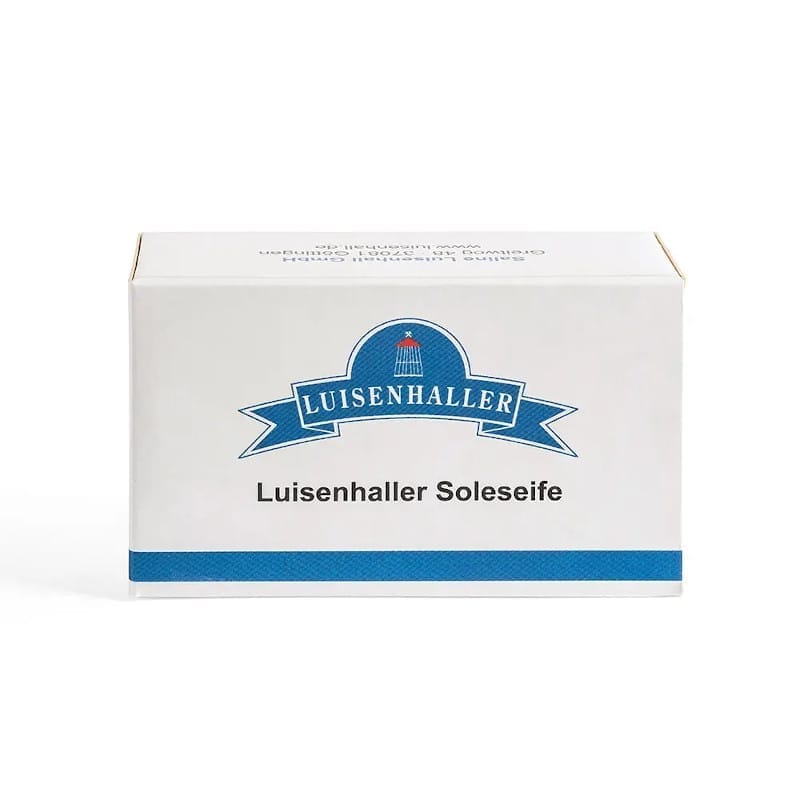
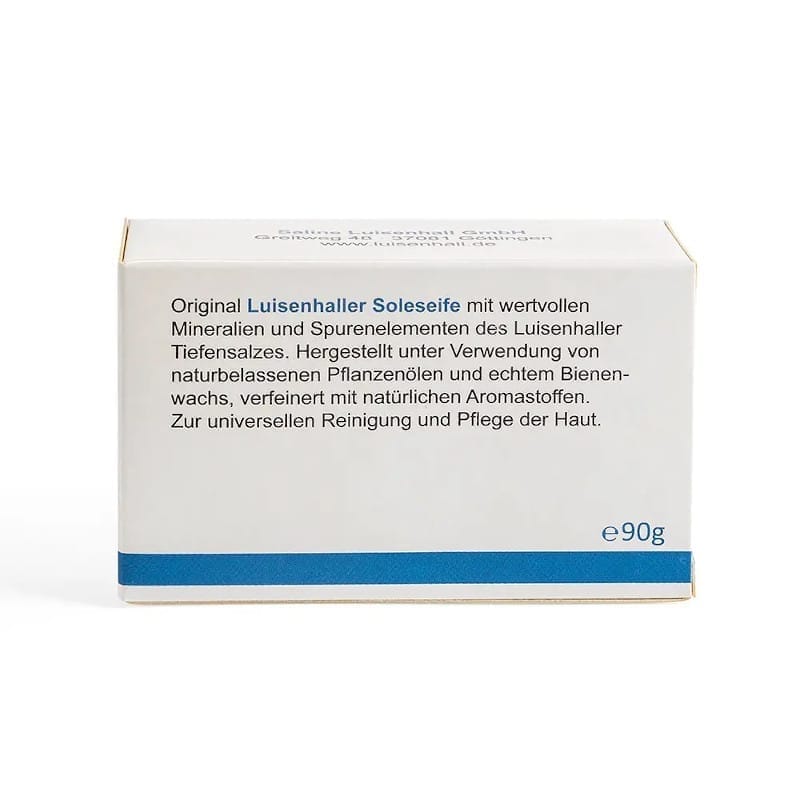
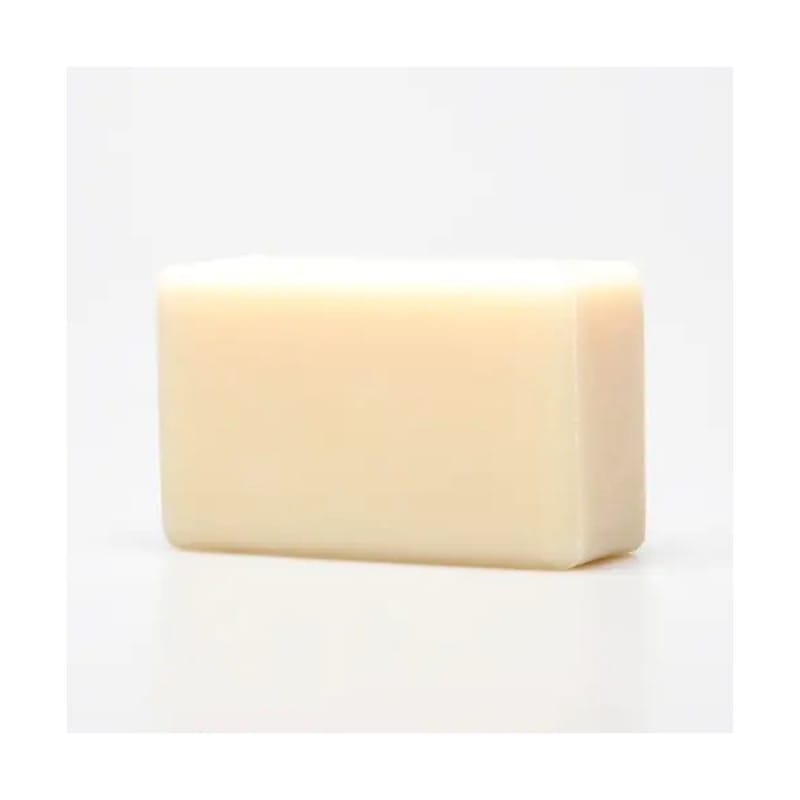
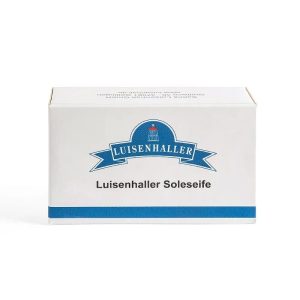
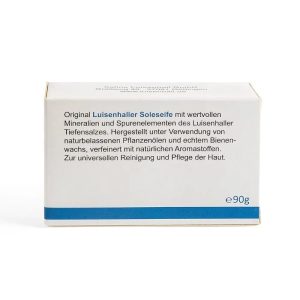
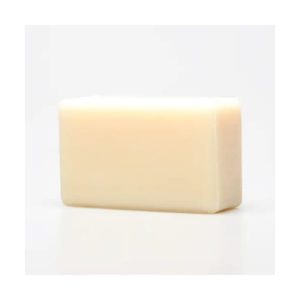
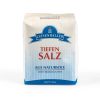
A gentle and rich soap containing valuable minerals and trace elements from Luisenhaller deep-sea salt.
In addition to Luisenhaller’s amazing salt, it contains vegetable oils and natural aromatics.
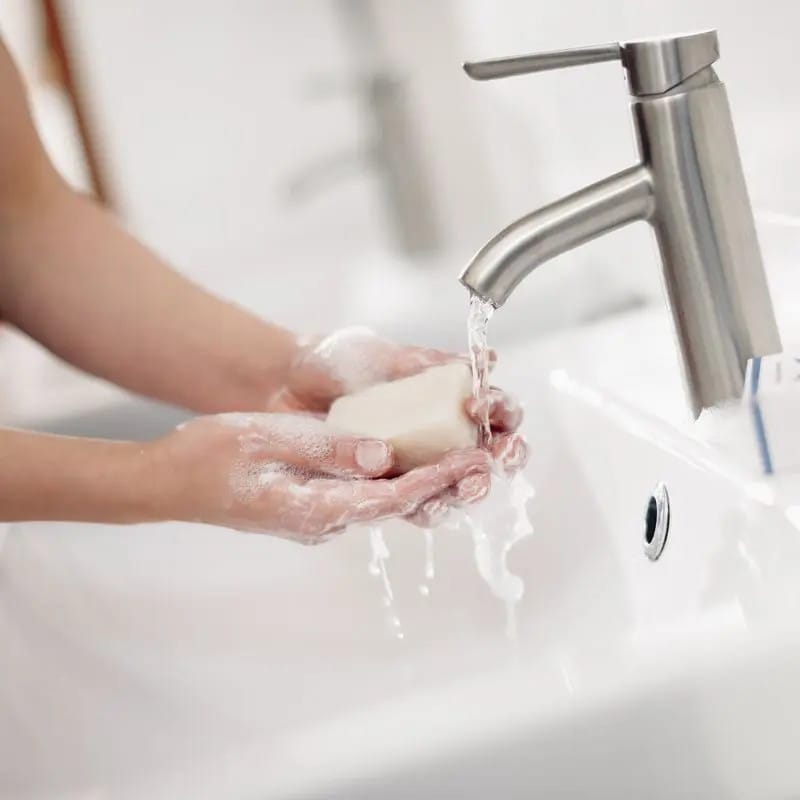
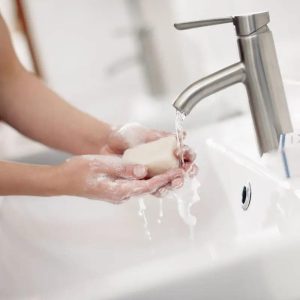
Universal soap for hands, body and shower.
Unscented, very mild; can also be used on the face and as shampoo.
Great for those with sensitive skin! We at Valfrids highly recommend this soap.
Made in Germany. The salt comes from an untouched underground sea, completely free of microplastics and pollutants.
Ingredients:
Sodium Olivate, Sodium Cocoate, Sodium Stearate, Aqua, Glycerin, Sodium Chloride, Tetrasodium Glutamate Diacetate.
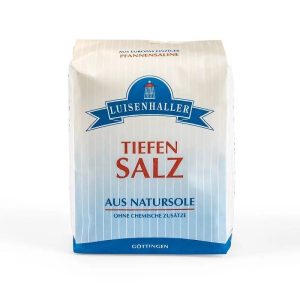
Luisenhaller is the only evaporative saltworks still in operation in Europe. In a whole year, they produce about as much as the big producers do before breakfast break in a day. But the products are not really comparable. Luisenhaller’s salt is extracted as a 27% solution from 250 million-year-old sea salt deposits at a depth of 450 meters. The brine is pumped up and heated in large, shallow pans until the salt crystallizes and can be skimmed off. It is a process that is at least a thousand years old. And apart from the hydroelectric power that was originally used—which was later replaced by electricity—not much has changed at Luisenhaller. It is one of the very few places where you can see how salt was made in the past. The production facility, with its massive oak building and 19th-century machinery, is a historic landmark that can be visited by appointment through the Göttingen Tourist Office.


Who was Luise?
There was a time when companies didn’t use globally protected fancy words or cryptic acronyms invented by well-paid design agencies as their names. Instead, they simply bore the name of the owner’s mother.
In Luisenhaller’s case, the name of the mother of the brothers Louis and Theodor Laporte, who bought the saltworks as second owners in 1863. Unfortunately, this brought them no luck. Neither did the geologist Philipp Rohns, who founded the salt works in 1850, and several other owners who came after them, all of whom tried in vain to make the salt works a commercial success. This was first achieved by Hermann Bartold Levin, the son of a Göttingen cloth manufacturer, who took over the salt works in 1881 and, as the forerunner of all subsequent generations, made the business flourish. Luisenhaller was subsequently run successfully by his sons and grandsons and has remained an independent family-owned business to this day; Jörg Bethmann has been at the helm since 1994.
See photos below from Luisenhaller’s history.


| Composition of Luisenhaller salt. | |
| Analysis by Institut Fresenius. | |
| Sampling number 230991362. | |
| Subject matter | mg/l |
| Total amount of dissolved minerals | 320140 |
| Cations | |
| Sodium | 123000 |
| Magnesium | 522 |
| Calcium | 1700 |
| potassium | 438 |
| Ammonium | 11 |
| Lithium | 1,9 |
| Barium | <0,050 |
| Strontium | 36,6 |
| manganese | 0,66 |
| Iron | 0,78 |
| Iron (bivalent) | 1,1 |
| Anions | |
| chloride | 191000 |
| fluoride | <0,02 |
| Bromide | 74 |
| Iodine | 0,37 |
| Nitrite | <0,005 |
| nitrate | <1,0 |
| Sulfate | 3300 |
| Hydrogen carbonate | 1 |
| Carbonate | <3 |
| Non-dissolved substances | |
| Silicic acid | 5,28 |
| Boric acid | 15,8 |
| Trace elements | |
| Aluminum | <0,005 |
| Antimony | <0,005 |
| arsenic | <0,001 |
| Beryllium | <0,0005 |
| Lead | 0,003 |
| Boron | 3,9 |
| cadmium | <0,0002 |
| Cesium | 0,03 |
| Chromium | <0,002 |
| Cobalt | <0,001 |
| Copper | <0,005 |
| Molybdenum | <0,005 |
| nickel | <0,005 |
| Mercury | <0,0001 |
| Rubidium | 0,55 |
| Selenium | <0,025 |
| Silver | <0,0005 |
| silicon | 1,9 |
| Sulfide | <0,005 |
| Zinc | 0,071 |
| Tenn | <0,001 |
| Weight | 0.1 kg |
|---|---|
| Dimensions | 0.08 × 0.03 × 0.05 m |
Show only reviews in English ()
Be the first to review “Soap with Deep-Sea Salt – Luisenhaller”
KÖPS OFTA IHOP
All about health and food
All about health and food
Frequently bought together
Related products
All products
All products
All products
All products
All products
All products
Reviews
There are no reviews yet.