


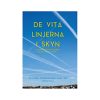

The Land of the Pelican – By Anna Aswani (Böhlmark)
During the long journey along the undulating trails of the Santiago Trail, we follow the author’s journey. Just like a roller coaster. It is not just an outward journey—a difficult physical challenge that requires endurance and mental strength—but above all, it is an inner journey. A journey about a woman’s quest for awareness, self-knowledge, and connection. Connection with nature, with oneself, with one’s mother, with the world, with the primordial mother, with life, and perhaps most difficult of all—connection with one’s innermost self, with love. Only then could she achieve freedom.
Review / Helena Janlöv Remnerud:
“Pelikanens Land” is a three-part story depicting a woman’s reflections on what has shaped her life and how this has affected her relationships with men. Step by step, we get to follow Anna’s reflections on life and the insights she arrives at. What is it that causes her to swing back and forth between closeness and distancing herself? How have her relationships with her mother and father, respectively, influenced her life circumstances and the choices she has made as an adult woman?
During a hike with her mother along the Camino de Santiago, we follow her as she, step by step, reflects on all her relationships—both the relationship she had with her parents, who divorced early in her life, and the relationships she has had with men as an adult. Could these be related?
The book offers an insightful portrayal of what happens emotionally when a person experiences, during childhood, a sudden disruption in the emotional bond with their most important attachment figure—their mother—which, in the book, happened to the protagonist’s father. The text skillfully describes how this disconnect can lead to borderline-like behavior, which involves difficulties that prevent the person from recognizing their own role in a relationship; instead, they perceive others as unfair, mean, or hostile. This leads to constant disruptions in both social and close relationships, which in turn spill over into the next generation—much like the experiments conducted on baby monkeys, all of which demonstrated the importance of providing growing primates with more than just food: the importance of love.
The book shows—just like the experiments with monkeys—that if a child lacks the early warmth and love that serve as the foundation for building a sense of self-confidence and an inner sense of happiness in life, the child will seek solutions outside of themselves. This book is deeply moving, both in its descriptions of the wounded little child’s journey toward self-awareness and in the strength that can be drawn from experiences in nature—such as the hike along the Camino de Santiago all the way to its final destination, Finisterre— with its symbolic double meaning.
| Weight | 0.407 kg |
|---|---|
| Dimensions | 0.16 × 0.015 × 0.23 m |
KÖPS OFTA IHOP


All about health and food

All about health and food
All about health and food

All about health and food
Frequently bought together
Related products
All products



All products


All products

All products

All products


All products