


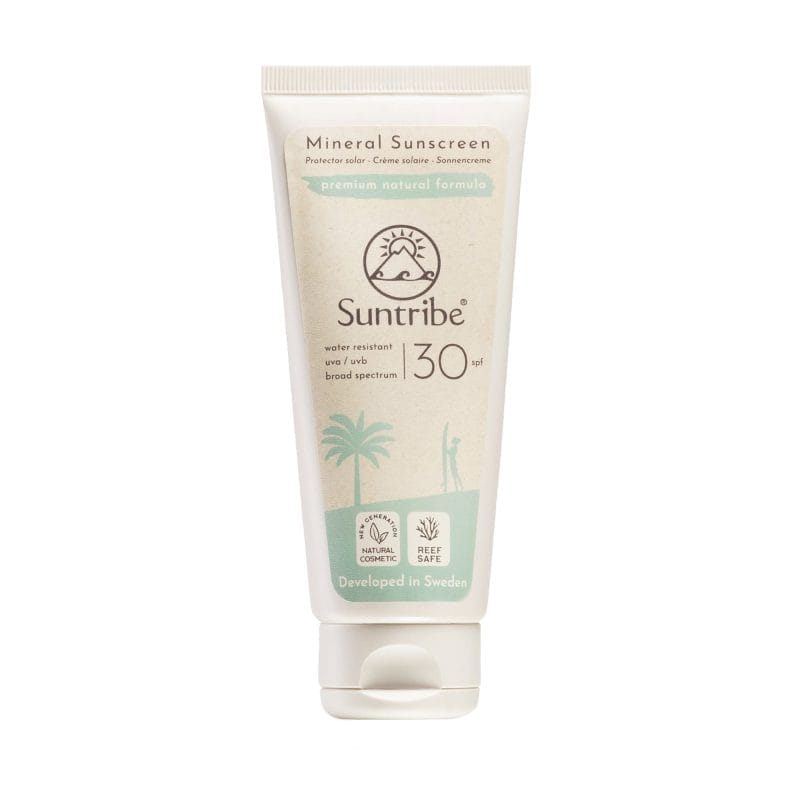
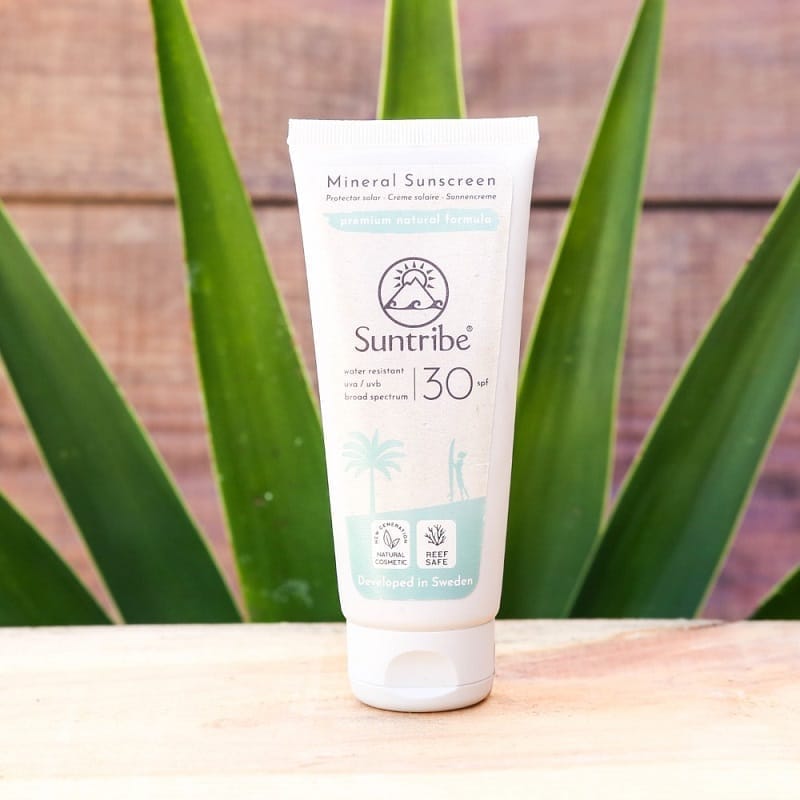
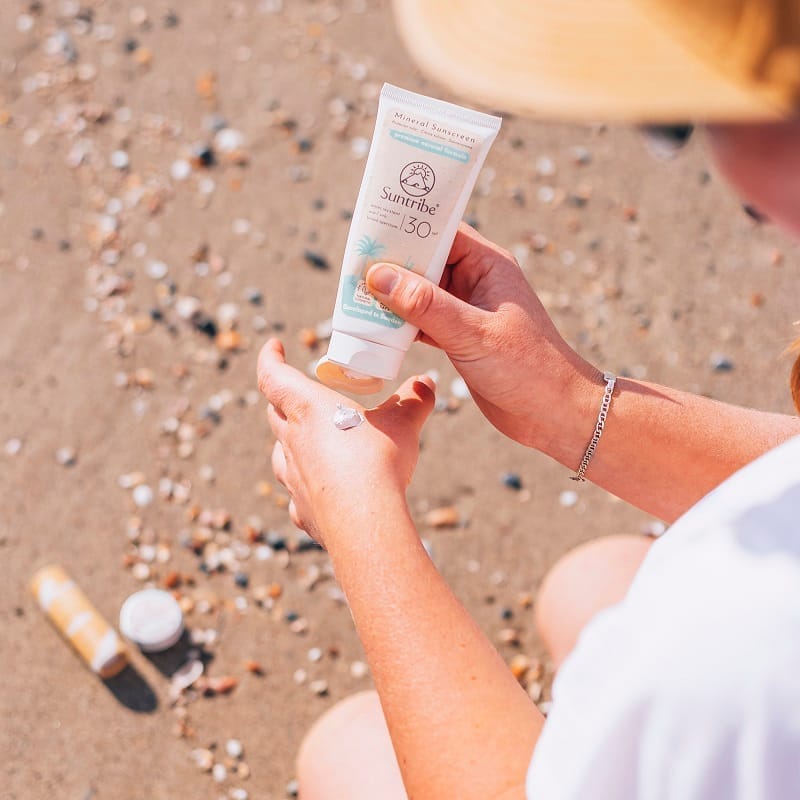
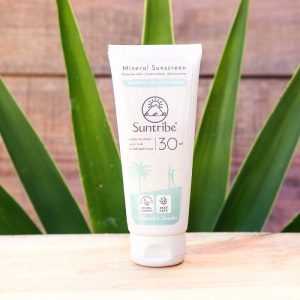
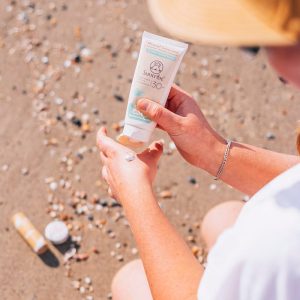
Effective and natural sunscreen with UVA and UVB protection without nanoparticles and chemicals
Scientifically validated broad spectrum protection against both UVA & UVB rays – SPF 30 (blocks 97% of UVB rays). Water-repellent. Safe for marine life and corals.
Lightly tinted (mineral sunscreens are often slightly white). Also contains coconut oil and cocoa butter.
If you have sensitive skin, this is particularly recommended.
Content:
Helianthus Annuus (sunflower) seed oil°, non-nano zinc oxide, Cocos Nucifera (coconut) oil°, Cera Alba (beeswax)°, Theobroma Cacao Seed Butter°, Butyrospermum Parkii (Shea) Butter°, Theobroma Cacao Seed Powder°, Tocopherol (vitamin E from sunflower oil). °Ecological
Packaging:
Material: Bio-based sugar cane stub, fully recyclable. 100% recycled paper labels. Made in the EU.
Sustainability:
At least months (check the date on the packaging). If the consistency or scent does not change, you can still use the sunscreen after the expiration date, the sunscreen will still work.
Why mineral-based sunscreen?
Our Suntribe sunscreens contain only non-nano zinc oxide and vegetable oils for sun protection. The mineral zinc oxide acts as a barrier against UV radiation, so it is also called physical sunscreen. The second type is chemical sunscreens.
Of course, we at Valfrids don’t like chemical sunscreens. The question is whether they are safe to apply to the skin at all, especially on young children. Many consider them toxic and they are now known to be responsible for damaging coral reefs. Chemical sunscreens (Oxybenzone and Octinoxate) have now been banned. Despite this, you can still buy chemical, toxic children’s sunscreens in bottles from pharmacies.
Zinc oxide in non-nano form is considered the safest sunscreen. It is not absorbed through the skin, the particles are too big. And even if it were to be absorbed, it is only zinc, a vital mineral!
The other physical sunscreen agent is titanium dioxide. Some mineral-based sunscreens contain this. Suntribe’s does not. We at Valfrids believe that titanium dioxide is quite ok, although not as safe as zinc.
The only disadvantage of mineral-based sunscreen is that it turns you a little white. They are creamier and whiter than chemical sunscreens. Suntribe has a colored version that is less visible. But if you’re on the beach or if the sun is strong, this whiteness doesn’t matter much. If you are really ambitious and you can mix in some foundation of a pure variant, such as Dr. Hauschka or similar that is chemical-free, to a color that suits your skin tone.
Mineral-based sunscreens are photostable, meaning they do not break down under UV light. Chemical sunscreens do, so you need to reapply them often. The chemicals are also “phototoxic”, which means that when they break down, they decompose into aromatic acids, aldehydes (the stuff that makes you hungover if you drink alcohol!), acetophenones and more – chemicals that are not good for your skin.
Suntribe is a Swedish company, started by three friends. Their sunscreens are completely free of synthetic chemicals, perfumes, preservatives and toxic sunscreens. They are so clean that you could basically eat them.
We looked for non-toxic sun protection and found Suntribe. It’s not easy to get hold of such pure sun protection products, so we are very happy to sell Suntribe now!
| Weight | 0.01 kg |
|---|
Be the first to review “Suntribe Mineral Body & Face Sunscreen SPF 30”
You must be logged in to post a review.
Related products
All products
All products
All products
All products
All products
All products
All products
Reviews
There are no reviews yet.